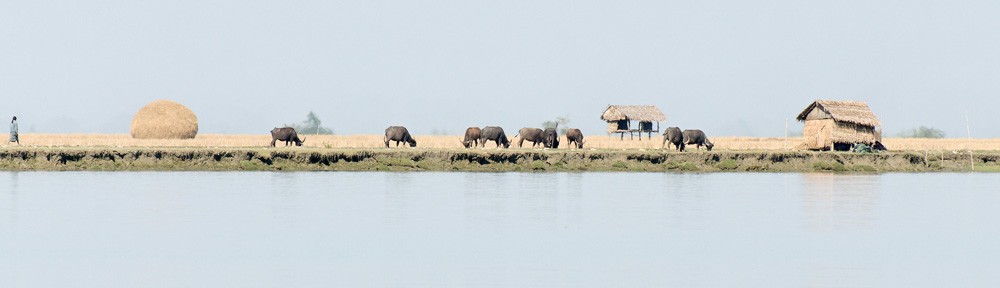
Today’s Birthday: Jorge Francisco Isidoro Luis Borges Acevedo

Jorge Luis Borges was born on August 24, 1899 in Buenos Aires, Argentina. He was a colassal figure in Spanish language arts and letters. His work is classified as fantasy and philosophical literature; he was a poet and translator, too. My second book Tsunami Cowboys includes a quote of his.

Borges said, “Time is the substance I am made of. Time is a river which sweeps me along, but I am the river; it is a tiger which destroys me, but I am the tiger; it is a fire which consumes me, but I am the fire.” [1]

In his honor I am reprinting the post I wrote after visiting a tiger park in India. – Jadi

“A brave heart and a courteous tongue,” said he. “They shall carry thee far through the jungle, manling.” —The Jungle Book, Rudyard Kipling [2]

We’re in India for a few weeks and currently we’re riding in the back of an open jeep. We spent the better part of five hours each day on really bad roads to get here.

D31_9982_DxO8

Now we’re layered in the few long-sleeved clothes we brought along. How cold can it be if you’re not way up north trekking in the Himalyas?

How cold? Man, it’s effing freezing.

It’s shortly after 6 a.m. in the Bandhavgarh Tiger Reserve and we’ve been up since 5:00. “Remind me,” I beg. “What are we doing here?” I wrap the blanket the tiger lodge lent us tighter around my body. (What I really want is a sub zero temperatures sleeping bag.) “Remind me,” I ask again. “Why are we doing this?”

“You wanted to come back to India,” Uwe prompts.

“Oh, yeah. Now I remember.” And it’s true: I was really excited to return. I fell in love with the subcontinent when we visited a decade ago. In Goa we walked miles of pristine beaches. In Karnataka we attended an astonishing Nandi Purnima, the full moon festival, and Hampi was a bare landscape filled with gigantic boulders and ancient temples.

In a country this exotic and large, surely we’d experience something new when we came back. What I did not expect was that I’d be freezing my ass off.

***

D31_9976_DxO8
Entrance to Bandhavgahr National Park

We’re doing a mix of culture and nature. India is one of the two most populated countries on the planet, and we thought it would be smart to schedule some time in quieter areas too. I’m glad we did. The north central region of Madya Pradesh is green and varied and home to some of the few remaining wild Bengal tiger populations.

So for two days at Bandhavgarh and a day at Kanha National Park*, we haul our sorry butts out of bed at the crack of dawn, pull on all our clothes and drape ourselves in borrowed blankets. 6 a.m.-1 p.m. for the early safari; 3-6 p.m. for the afternoon attempt. If we’re lucky, we’ll spot a big cat.

We’re not lucky. We’re cold.

***

Later we shed layers as the day warms up. The parks contain barking and spotted deer,

D32_0066_DxO8

gaurs, nilgai,

D31_9870_DxO8

lemurs and langurs,

D31_9944_DxO8
D31_9854_DxO8

wild peacocks and other birdlife,

D31_9997_DxO8
Green bee-eater
Green bee-eater
D32_0579_DxO8
Crested hawk-eagle
Crested hawk-eagle

wild boar,

D32_0649_DxO8

and a landscape filled with watering holes and high grasses, forest and farmers’ villages. On the second day at Bandhavgarh our jeep carries a park ranger to inspect a water buffalo kill from the night before. It occurred just outside the official boundary of the preserve and the farmer will be reimbursed for the animal the tiger took down.

One dead water buffalo

We aren’t allowed to leave the jeep – ever – and the ranger approaches the carcass very slowly.

Park Ranger inspecting water buffalo carcass
Be sure you notice that the ranger’s got on lots of clothes too.

Where there’s a fresh kill, the big cat can’t be far.

I mean it: it's really cold out.
I mean it: it’s really cold out.

By the third day I’ve perfected what I name the mummy wrap. I have myself wrapped so tight that I literally can’t move, but this way the blanket doesn’t unwind in the cold wind.

Brr.

And, suddenly, a tiger leaps from the forest, followed by his mate. He moves into the reeds and returns dragging a dead spotted deer by the neck.

D32_0369_DxO8
D32_0376_DxO8
D32_0398_DxO8
D32_0402_DxO8

We see them for less than a minute and those seconds are absolutely worth the days of waiting. My God, they’re magnificent! During the afternoon safari we get lucky again: 10 seconds of spotting a shyer, rarer leopard.

D32_0640_DxO8
The leopard moved unconcerned in the back through the high grass

Uwe captures the group of spotted deer nervously fleeing the leopard. He’s in Photographer Heaven.

Naturally we’re already dreaming – about an African safari.

In memory of Jorge Luis Borges, 24 August 1899 – 14 June 1986 

NOTES: [1] New Refutation of Time, Other Inquisitions, 1952. [2] Kanha National Park provided the inspiration for Rudyard Kipling’s The Jungle Book. © 2014 Jadi Campbell. Previously published as Remind Me Again: What Are We Doing Here? All photos © Uwe Hartmann.

My books are Broken In: A Novel in Stories, Tsunami Cowboys, Grounded, and The Trail Back Out.

Tsunami Cowboys was longlisted for the 2019 ScreenCraft Cinematic Book Award. Broken In: A Novel in Stories was semifinalist for the international 2020 Hawk Mountain Short Story Collection Award from Hidden River Arts and Finalist for Greece’s 2021 Eyelands Book of the Year Award (Short Stories). The Trail Back Out was the 2023 San Francisco Book Festival Winner for General Fiction, American Book Fest 2020 Best Book Award Finalist: Fiction Anthologies, Runner-Up for the 2021 Top Shelf Award, 2021 IAN Book of the Year Award Short Story Collection Finalist, and awarded a 2021 Wishing Shelf Red Ribbon. The title story The Trail Back Out was longlisted for the 2021 ScreenCraft Cinematic Short Story Award.

Click here for my author page to learn more about me and purchase my books.

Southern African Birds: At the Desert, the River Bank, the Salt Pan…

There is something incredibly surreal — and very, very funny — to be out in a jeep in the sand dunes on the Namibian coast and see the world’s largest bird stroll by.

Ostrich, Sandwich Harbor

Uwe posted photos from our recent trip to southern Africa on his photography website. He now has an entire section dedicated just to birds of Namibia. http://viewpics.de/pics/Namibia/Birds  Here are some of his birds and their stories.

The ostriches were seemingly everywhere. They walk around in the Namib, the world’s oldest desert and one of the driest places on the planet. They hang out in flocks in Etosha National Park.

They hang out with other species, too. It’s safety in numbers, as well as combining forces against predators. The elephants provide their bulk and the impalas have keen hearing and sight.

someone’s got to keep an eye out for the lions

We saw hundreds of flamingos on the coast.

Flamingos, Walvis Bay, Namibia

When the rainy season arrives, the flamingos send birds north to see if the saltpan in Etosha Park has flooded yet. If the scouts don’t return, the rest of the flocks head north as well. Ann and Mike Scott in NamPower/Namibia Nature Foundation Strategic Partnership Newsletter No. 5: September 2010 had this to say: “Greater Flamingos are widely distributed in southern Africa with concentrations at flooded salt pans (during breeding) and coastal bays (during non-breeding). …at the central coast, they are concentrated at Walvis Bay and Sandwich Harbour. … Breeding occurs in large, typically mixed colonies on raised islands on flooded salt pan at Etosha …. Laying induced by extensive flooding and continued high levels increases chances of success.”

The birds migrate to this giant saltpan in Etosha once it floods. 1,100,000 flamingos were recorded in an especially rainy year!

Etosha Saltpan, seen in November 2023 before the rains. It is 4,760 km² in size, up to 129 km long and 72 km wide, and covers almost 25% of Etosha National Park

Uwe photographed this juvenile African openbill stork in Etosha.

I’ve saved my favorite photo he took of the Southern carmine bee-eaters for this last post:

Almost everyone caught an insect

Here’s another bee-eater, this one in olive.

olive bee-eater

For the final image, I leave you with a species that birders and guides all get excited about: the lilac-breasted roller. Our guide was really pleased with himself that he got us close enough to this elusive bird for a photo.

the lilac-breasted roller IS stunning, isn’t it?

Much as I’d love to take credit for this post it owes everything to my husband’s great eye and good camera equipment.

NOTES: One last comment about the flamingos: their other regular breeding site in southern Africa is Sua Pan in the Makgadikgadi Pans in Botswana. We visited Makgadikgadi a few weeks later. ©2024 Jadi Campbell. ©2023 Uwe Hartmann. Uwe’s photos of our trips and his photography may be viewed at viewpics.de.

My books are Broken In: A Novel in Stories, Tsunami Cowboys,  Grounded and The Trail Back Out.

Tsunami Cowboys was longlisted for the 2019 ScreenCraft Cinematic Book Award. Broken In: A Novel in Stories was semifinalist for the international 2020 Hawk Mountain Short Story Collection Award from Hidden River Arts and Finalist for Greece’s 2021 Eyelands Book of the Year Award (Short Stories).

The Trail Back Out was the 2023 San Francisco Book Festival Winner for General Fiction, American Book Fest 2020 Best Book Award Finalist: Fiction Anthologies, Runner-Up for the 2021 Top Shelf Award, 2021 IAN Book of the Year Award Short Story Collection Finalist, and awarded a 2021 Wishing Shelf Red Ribbon. The title story The Trail Back Out was longlisted for the 2021 ScreenCraft Cinematic Short Story Award.

Click here for my author page to learn more about me and purchase my books.

The Magic of the Wildlife in Etosha National Park

Yes, another post about the wildlife of southern Africa. I’ve written about lions and giraffes and ostriches and marabou storks and hippos. No lengthy explanations this time. Instead, here are Uwe’s photographs of some other animals we saw. Every day brought new creatures into our consciousnesses. They’ve taken up residence there….

We saw all these wild animals during the four days we spent exploring Etosha National Park in Namibia. Seeing them in their natural habitat is powerful magic.

Black-faced impala male
Kori bustard
Grey duiker
Cheetahs
Rhino
Greater kudu
Zebras!
Blue wildebeest
Springboks
Blackbacked jackal
Red hartebeest

NOTES: ©2024 Jadi Campbell. Photos ©2023 Uwe Hartmann. Uwe’s photos of our trips and his photography may be viewed at viewpics.de.

My books are Broken In: A Novel in Stories, Tsunami Cowboys,  Grounded and The Trail Back Out.

Tsunami Cowboys was longlisted for the 2019 ScreenCraft Cinematic Book Award. Broken In: A Novel in Stories was semifinalist for the international 2020 Hawk Mountain Short Story Collection Award from Hidden River Arts and Finalist for Greece’s 2021 Eyelands Book of the Year Award (Short Stories).

The Trail Back Out was the 2023 San Francisco Book Festival Winner for General Fiction, American Book Fest 2020 Best Book Award Finalist: Fiction Anthologies, Runner-Up for the 2021 Top Shelf Award, 2021 IAN Book of the Year Award Short Story Collection Finalist, and awarded a 2021 Wishing Shelf Red Ribbon. The title story The Trail Back Out was longlisted for the 2021 ScreenCraft Cinematic Short Story Award.

Click here for my author page to learn more about me and purchase my books.